
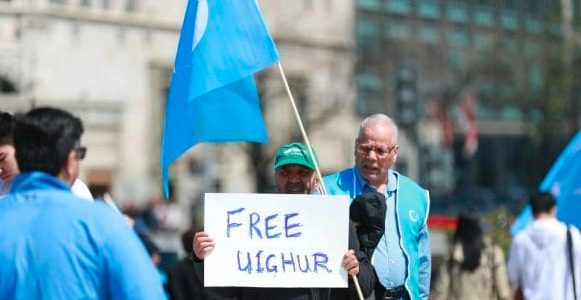
While UN is sounding alarm over Uyghur forced labor, is it still a priority for the US?
UN experts are raising renewed alarm over state-imposed forced labor affecting ethnic minorities in China. At the same time, questions are growing over US priorities after a sharp decline in efforts to block goods linked to forced labor from entering the country. While the experts urged stronger supply-chain due diligence, US Customs and Border Protection (CBP) detentions of suspected forced-labor shipments have fallen from an average of over 1000 a month to just over 200 a month.
A “persistent pattern” of forced labor
UN human rights experts have raised “deep concern” over ongoing forced labor involving Uyghur, Kazakh, Kyrgyz, and Tibetan communities across China. While the mass detention camps that once drew global attention have largely closed, the experts said coercive labor practices continue through government-mandated labor transfer schemes.
Yahoo News reports,
“There is a persistent pattern of alleged state-imposed forced labor involving ethnic minorities across multiple provinces in China,” a panel of special rapporteurs and working group members appointed by the United Nations Human Rights Council said in a statement Thursday. “In many cases, the coercive elements are so severe that they may amount to forcible transfer and/or enslavement as a crime against humanity.”
In the Uyghur region, forced labor reportedly operates through the government’s “poverty alleviation through labor transfer” program. Under the scheme, ethnic minorities are assigned work under surveillance. Workers often cannot refuse or change jobs due to fear of punishment or arbitrary detention. Although China’s five-year plan projected 13.75 million labor transfers between 2021 and 2025, the UN experts said the actual figures have exceeded those targets.
Tibetans face similar coercive systems, including the Training and Labor Transfer Action Plan. They said nearly 650,000 Tibetans were subjected to labor transfers in 2024. These schemes, they warned, forcibly reshape livelihoods and erode cultural and religious practices.
China’s foreign ministry rejected the findings, calling the UN experts’ concerns “fabricated” and “completely unfounded.”