
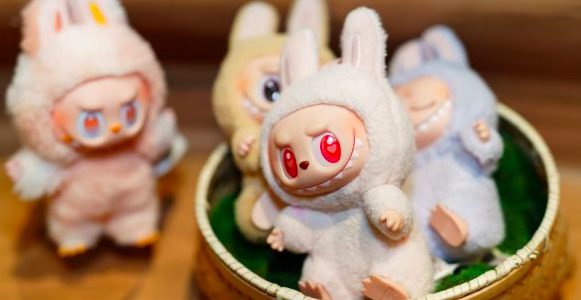
Labubu dolls maybe scary, but they are being made under even scarier working conditions
A labor rights investigation has raised serious concerns about the exploitative working conditions inside the supply chain of Labubu toys, a global pop culture phenomenon produced by the Chinese company Pop Mart.
The popularity of Labubu toys grew rapidly in 2025. In the first half of the year, Pop Mart’s “Monsters” line generated 4.8bn yuan (£511m) in sales, with production scaling up to meet global demand. But China Labor Watch (CLW) found that this growth has translated into “pressure borne directly by workers.”
What’s really behind the Labubu boom
As demand for the furry figurines surged worldwide, workers at a factory in China’s Jiangxi province paid the price. Workers say they faced excessive overtime, unsafe conditions, and a lack of basic labor protections.
CLW, a New York–based NGO, investigated Shunjia Toys, one of Pop Mart’s suppliers, over three months in 2025. Researchers interviewed more than 50 workers, including three aged under 18, all of whom were producing Labubu toys exclusively. The investigation found evidence of exploitative working conditions that violate both Chinese labor law and international standards.
According to CLW, the factory routinely required workers to sign blank labor contracts. Workers were told to enter only personal details, while key terms such as wages, job duties, and social insurance were left empty and unexplained. CLW said:
Workers were given no more than five minutes to complete the process and were told explicitly not to read or fill in other sections,
The investigation also found that 16- and 17-year-old workers were assigned to standard assembly line roles without the special protections required for young workers under Chinese law. These workers reportedly carried the same workload and production targets as adults. The report also said the underage workers mostly did not understand their contracts or their legal status when asked.