
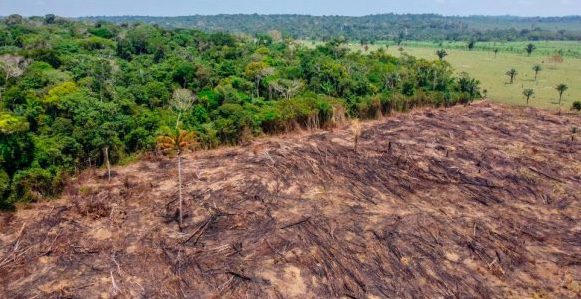
How a modern slavery crisis is a part of the deforestation crisis happening in Brazil
In Brazil, the same industries that clear forests are also trapping workers in slave-like conditions. Behind cattle, charcoal and sugarcane production are thousands of people facing threats, unsafe conditions and extreme exploitation. Over three decades, the majority of rescued workers were found in sectors linked to environmental destruction—exposing how vulnerability and weak protections allow abuse to flourish.
Forest loss, isolation and forced labor
In June 2025, three men were rescued from a farm in São Félix do Xingu, Pará. They had been hired to clear forest to open pasture. Instead, they were threatened, denied drinking water and protective equipment, and forced to sleep in a pigsty.
Their case is far from isolated. As Brasil de Fato reports:
When combined with other activities such as cattle ranching, charcoal production, mining and sugarcane cultivation, the share of slave labor cases linked to activities that cause severe environmental degradation rises to 57% of the 67,058 workers rescued nationwide over the same period.
Cattle ranching alone accounts for 26% of all rescued workers. It is also the leading driver of deforestation in Brazil. In the Amazon, 9 million hectares of forest were converted into pasture in the past decade. Authorities have identified a consistent link between illegal land clearing and labor abuse. Brazil’s Labor Prosecutor’s Office (MPT) said in a statement:
Activities involving illegal vegetation clearing are usually linked to cases in which workers are subjected to conditions analogous to slavery.
These jobs often take place in remote areas, where inspections are rare and workers are isolated. Recruiters frequently target men from poorer regions, promising income and steady work. Once on site, workers may face debt, threats, degrading living conditions and exposure to toxic chemicals without protection.
In August 2025, authorities rescued 17 more workers from another farm in São Félix do Xingu. They had no formal contracts or regulated hours. Some slept under tarps; one slept in a chicken coop. Although protective equipment was present on the farm, it was not given to workers handling pesticides.